BY: Le’ren Jones
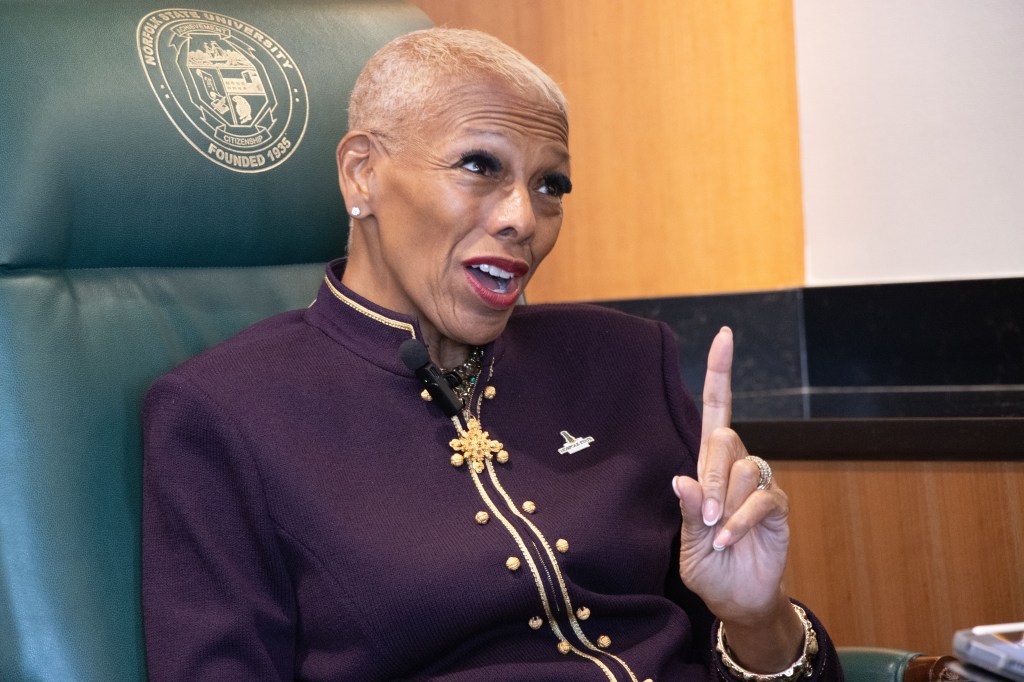
Javaune Adams-Gaston, Norfolk State University’s seventh president, has overseen several changes at the university in recent years.
Some of those changes have included technology advancements, such as a $118 million science building scheduled to open in the fall of 2027. The four-story building, adjacent to the campus library, is expected to include research labs and classrooms for biology, chemistry, and physics students, as well as a greenhouse and a 150-seat planetarium.
This is one of several changes at the university since Adams-Gaston became president in 2019.
Norfolk State has also secured partnerships with companies such as Netflix, Apple, Sentara Healthcare, and Dominion Energy to support scholarships and technological advancements.
In a recent interview with The Spartan Echo, Adams-Gaston said she prioritized these initiatives as part of her broader goal of addressing the university’s long-standing challenges.
“Norfolk State is a beautiful campus, and people didn’t know how beautiful the campus is; [it’s] just getting better all the time. But it had some structural issues,” she said.
She recalled noticing during her first few months in the President’s House on campus that the internet connection was considerably poorer than at her previous home in downtown Norfolk, about a mile away.
When she inquired about the difference in quality, she was informed that the broadband access did not expand to include the lower-income residential community.
Adams-Gaston said such infrastructure disparities are common among minority-serving institutions of higher education.
“That is, unfortunately, a repeated issue in our communities,” she said.
This disparity reflects a decades-long pattern of funding inequality affecting public HBCUs. In 2023, federal officials identified Virginia as one of 16 states that had underfunded their historically Black land-grant universities over several decades, resulting in a combined funding gap of more than $13 billion nationwide.
Despite these funding challenges, HBCUs have continued to expand. Norfolk State University, Virginia State University, Elizabeth City State University, and Howard University are among the institutions that have reported enrollment increases.
Even as Norfolk State and HBCUs across the country show signs of growth, many students continue to face financial challenges. According to the Pew Research Center, 75% of HBCU students reported having to choose between paying for college and meeting basic needs, compared with 58% of college students overall. HBCU students were also more likely to work full time while pursuing their degrees, at 71%, compared with 56% of college students overall.
Adams-Gaston aims to address these challenges by expanding on-campus professional development opportunities related to students’ fields of study.
“My goal is that students in their first and second year would have a job on campus [with] learning outcomes, because what we’re really trying to do is not only have you work, but also have you understand what you’re learning as you work.”
The university was one of five HBCUs selected this year for the Lumina Foundation’s From Campus to Career initiative, a program that provides funding to help colleges and universities expand career-connected learning opportunities. Through the initiative, NSU can expand opportunities for students through internships, undergraduate research, study abroad, service learning, and capstone projects.
According to the university, Norfolk State maintains one of the lowest tuition rates in Virginia. Adams-Gaston hopes the university’s affordability and commitment to students’ financial well-being will help improve student outcomes.
Fundraising has also been a focus during Adams-Gaston’s tenure. One of those efforts was the Now Is Our Time campaign, the second and largest fundraising campaign in Norfolk State’s history
Launched in 2020, the campaign initially aimed to raise $90 million but ultimately surpassed its goal, raising more than $147 million.
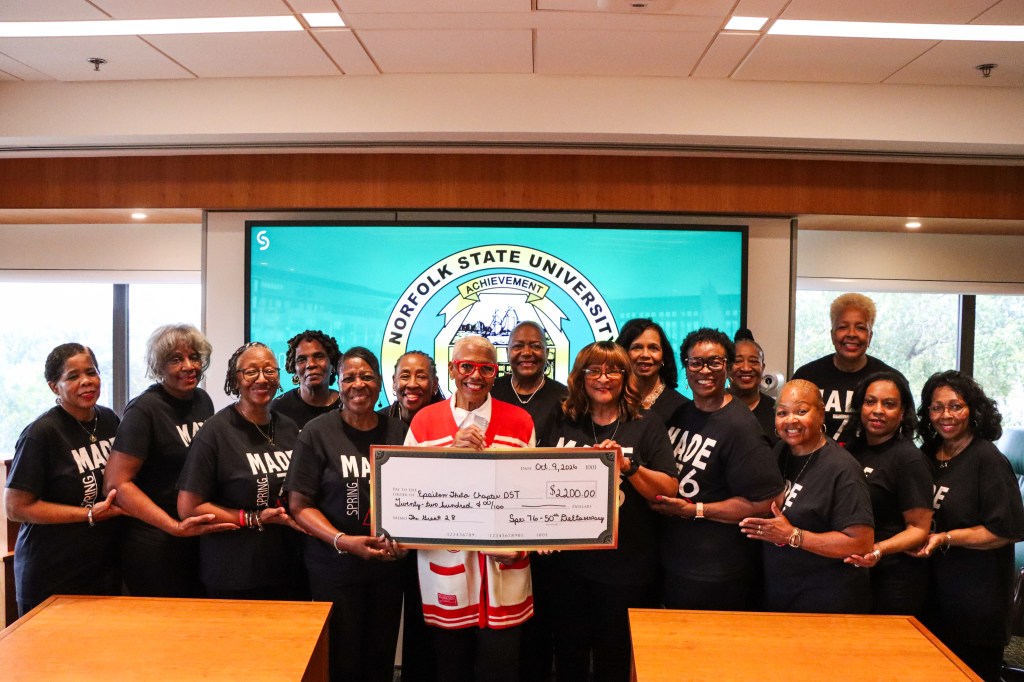
Homecoming celebrations also provide opportunities for HBCUs to seek financial support from alumni. More than 48,000 people attended Norfolk State’s Homecoming festivities this year. Ahead of the celebration, Adams-Gaston emphasized the importance of continued giving beyond the university’s recent fundraising campaign.
“What people will see sometimes, if you do a successful campaign, they think, ‘Okay, they’re fine,’” she said. “We’re good, but we’re not fine.”
As campus improvements become more visible, Adams-Gaston said she hopes alumni will continue supporting the university and its students.
“We have to get everybody on board with giving. We have some great, great alums who have done spectacular things. But I also want everybody to know, “No gift is too small.”
“We’re really in the business of making sure that folks understand that these are brilliant students, and they just need the opportunities. We’re providing those opportunities,” Adams-Gaston added.