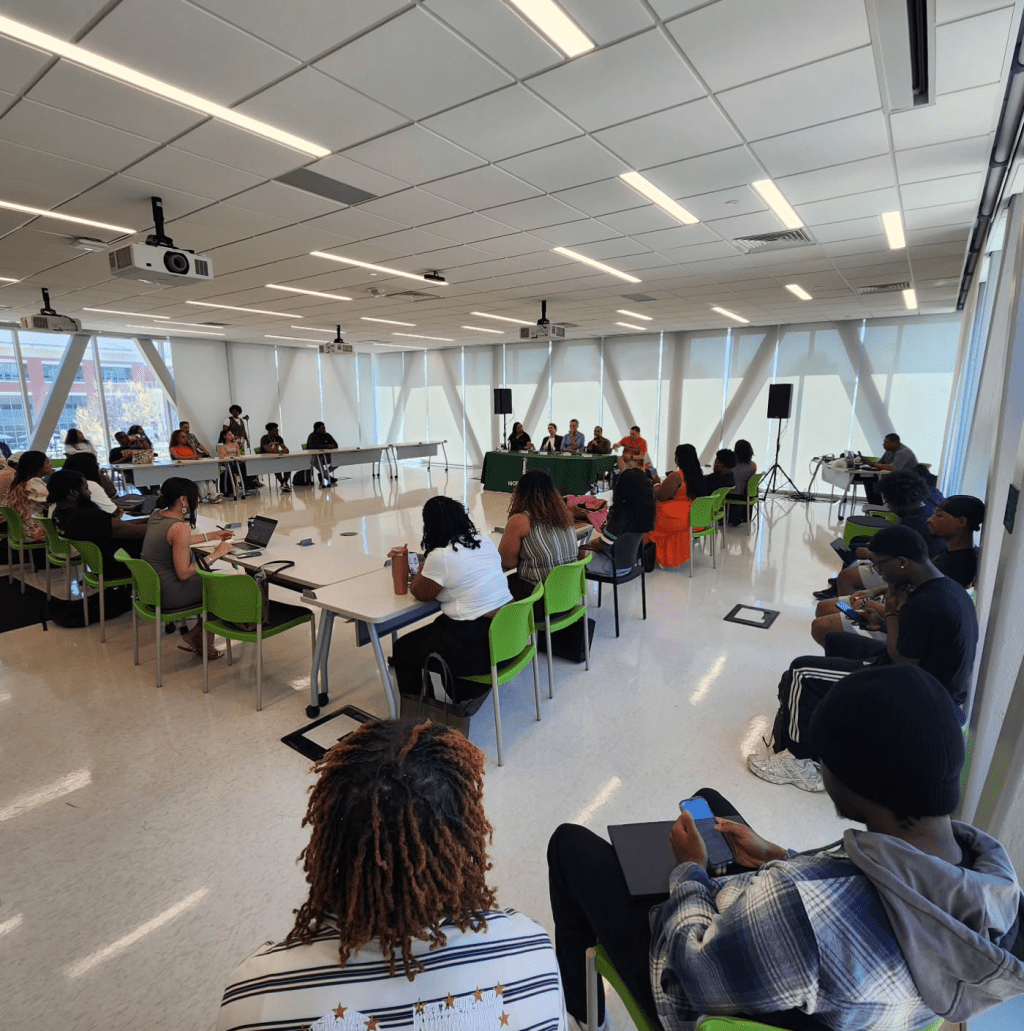
MCJR Week Panel. Via: Instagram
By: Jada Corey
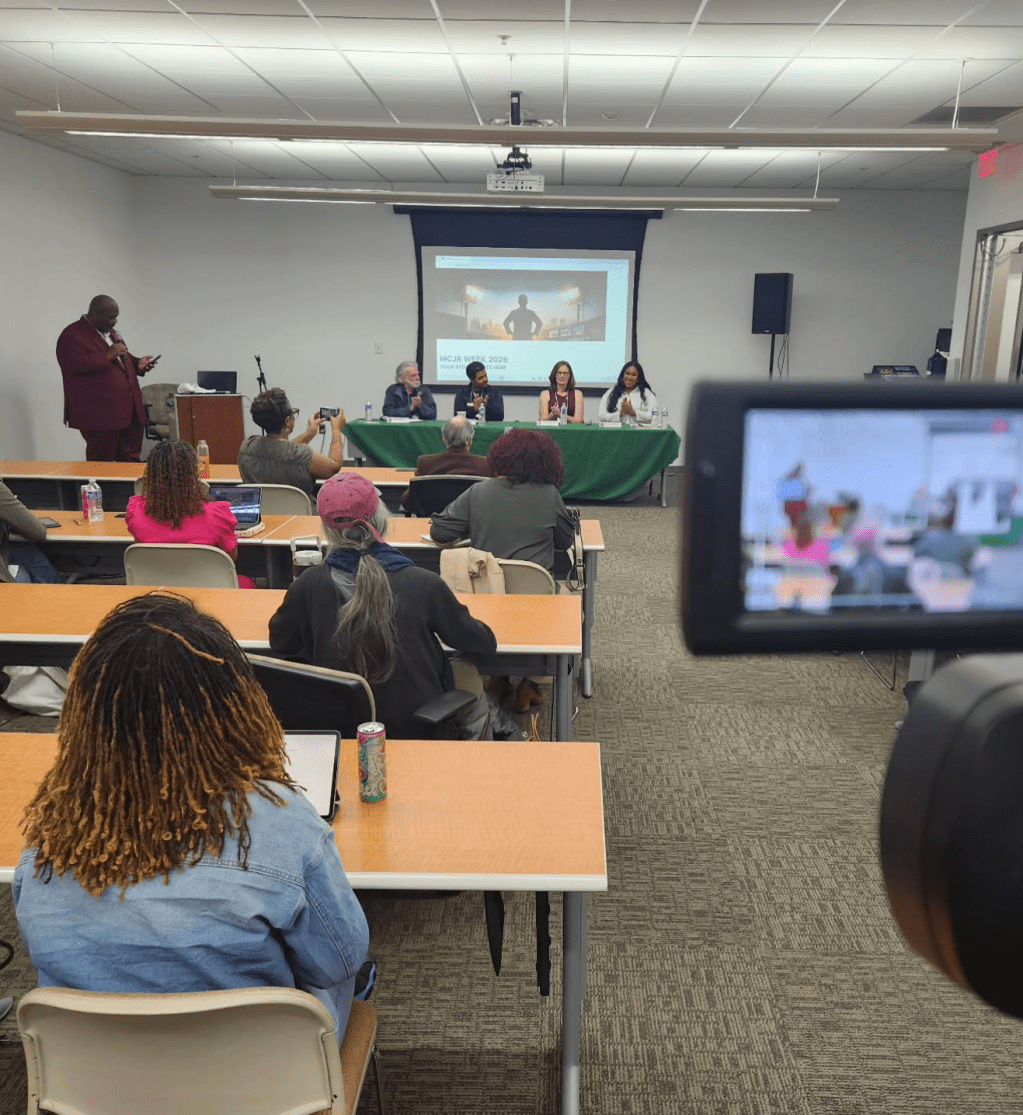
In celebration of MCJR Week, the Department of Mass Communications hosted a remarkable event, “The Battle for Our Stories: Media Policy & Power,” discussing the power in media policy as it relates to democracy.
Panelists Brandon Froster, Yosef Getachew, Matt Wood, and Jonathan Walter shared insight on how media laws and regulations shape storytelling, access, opportunity, and what it means within our democracy, especially with the current administration.
The panel, hosted by Dr. Alisa Valentin, touched on a broad range of impactful issues affecting the modern digital landscape. The panel first discussed the Telecommunications Act of 1996. Marking the Act’s 30th anniversary in recent years, the panel highlighted the irony of the unfulfilled promises of the Act regarding equity, access, and competition, as the current administration and recent policy undermine them.
Significant concern was raised regarding the concentration of wealth and power within the media. As we know, the media has been a great tool for not only democracy but oppression. With large companies and tech billionaires acquiring local news stations and newspapers, they are taking the voice from communities and controlling the narrative. The disappearance of local journalism and replacing it with “ghost newsrooms” misinforms the community by delivering biased narratives rather than serving the local community.
The panel also tackled topics such as artificial intelligence in relation to civil rights and the risk of embedded cultural bias in hiring or housing. Panelists discussed the loss of funding for the Digital Equity Act, raising concern for barriers facing rural, disabled, and low-income communities in accessing reliable internet and devices needed to navigate this digital age. The panel also emphasized the important role students within the department take on as aspiring journalists and media professionals.
The panel was not only informative but also provided an opportunity for students to have an engaging conversation with attorneys and professionals within the world of policy, amplifying the voices of the communities they serve and reiterating the importance of not only media literacy but media policy.
In celebration of MCJR Week, the Department of Mass Communications hosted a compelling event, “The Battle for Our Stories: Media Policy & Power,” discussing the power in media policy as it relates to democracy.
Panelists Brandon Froster, Yosef Getachew, Matt Wood, and Jonathan Walter shared insight on how media laws and regulations shape storytelling, access, opportunity, and what it means within our democracy, especially with the current administration.
The panel, hosted by Dr. Alisa Valentin, touched on a broad range of impactful issues affecting the modern digital landscape. The panel first discussed the Telecommunications Act of 1996. Marking the Act’s 30th anniversary in recent years, the panel highlighted the irony of the unfulfilled promises of the Act regarding equity, access, and competition, as the current administration and recent policy undermine them.
Significant concern was raised regarding the concentration of wealth and power within the media. As we know, the media has been a great tool for not only democracy but oppression. With large companies and tech billionaires acquiring local news stations and newspapers, they are taking the voice from communities and controlling the narrative. The disappearance of local journalism and replacing it with “ghost newsrooms” misinforms the community by delivering biased narratives rather than serving the local community.
The panel also tackled topics such as artificial intelligence in relation to civil rights and the risk of embedded cultural bias in hiring or housing. Panelists discussed the loss of funding for the Digital Equity Act, raising concern for barriers facing rural, disabled, and low-income communities in accessing reliable internet and devices needed to navigate this digital age. The panel also emphasized the important role students within the department take on as aspiring journalists and media professionals.
The panel was not only informative but also provided an opportunity for students to have an engaging conversation with attorneys and professionals within the world of policy, amplifying the voices of the communities they serve and reiterating the importance of not only media literacy but media policy.

 Spartan Echo