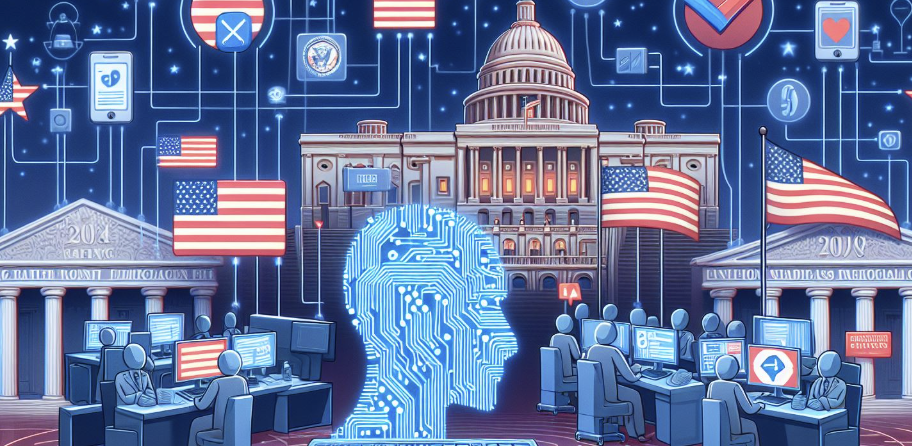
AI & Politics. Via: “Rods Blog”
By: Jada Corey
As of early 2026, more than 25 major companies, alongside several high-profile philanthropists, have financially supported former President Donald Trump. Recent financial reports from late 2025 and early 2026 revealed that OpenAI President Greg Brockman and his wife made a $25 million contribution to MAGA Inc., making them one of the largest individual donors of the cycle.
The disclosure, coupled with OpenAI CEO Sam Altman’s $1 million contribution to the 2025 Presidential Inaugural Fund, has triggered a quiet but growing rally among users of ChatGPT and other AI platforms. Brockman’s donation coincided with the Trump administration emphasizing policies aimed at securing U.S. dominance in artificial intelligence. Other tech leaders, including Altman, have reportedly contributed millions to pro-Trump entities and inaugural funds, signaling a potential shift in political alignment among major figures in the AI industry.
The donations sparked the grassroots boycott campaign QuitGPT, launched in early 2026 to protest OpenAI and its widely used ChatGPT product. The movement cites disagreements with political alignment, ethics, and government contracts. Actor Mark Ruffalo helped bring the campaign mainstream through Instagram, where his post earned over 1.6 million likes, turning QuitGPT into one of the most prominent consumer movements of 2026. The campaign has since gained significant traction, with over 700,000 users pledging to cancel their subscriptions. Organizers include democracy activists, climate organizers, and cyber libertarians.
Beyond financial support, activists have raised concerns about the Department of Homeland Security’s AI inventory, which indicates that U.S. Immigration and Customs Enforcement (ICE) uses a GPT-4-powered tool to screen resumes amid a mass deportation hiring surge. ICE is also reportedly leveraging AI tools from OpenAI and Palantir for enhanced lead identification and targeting, which extracts address data from warrants to assist in deportation arrests.
QuitGPT organizers highlight OpenAI’s market vulnerability, claiming the company is “losing three times more than it earns” and that its market share has dropped from 87% to roughly 65–68% over the past year. This makes a consumer boycott a potentially devastating force for change in leadership and policy. Many users expressed shock at discovering that companies they support daily may not align with their political values.
OpenAI is not the only entity generating controversy. Early 2026 also saw several philanthropists and companies back Trump’s Section 530A accounts, a new tax-advantaged savings vehicle for children. Established under the One Big Beautiful Bill Act, these accounts include a $1,000 federal seed for children born between 2025 and 2028. Many companies, including JPMorgan Chase, Bank of America, Citi, Mastercard, Visa, Chipotle, and Uber, are incorporating “Trump Account Match” programs into standard employee benefits packages.
Individual contributions from billionaires and celebrities have also drawn attention. Michael and Susan Dell pledged $6.25 billion, Ray and Barbara Dalio contributed sizable donations, and Nicki Minaj announced support ranging from $150,000 to $300,000. These contributions have blindsided many consumers, particularly in the Black community, as some celebrities appear to diverge from their previous stances.
Observers note that these developments underscore the intersection of media messaging and consumer agency, highlighting how individuals leverage economic capital as a form of political expression, aligning consumption patterns with ideological values to push back against controversial media and political trends.
 Spartan Echo