by Miles Givers
According to Justin Jouvenal, writer for The Washington Post, “A 12 year old girl is facing criminal charges for using certain emoji.”
“The 12-year-old from Fairfax, Va., has been charged with threatening her school after police said she posted a message on Instagram in December laden with gun, bomb and knife emojis,” Justin Jouvenal said. “It read in part: Killing 🔫, meet me in the library Tuesday 🔫 🔪 💣.”
Using emojis have become a large part of how today’s society communicate with each other. It’s sending different cartoonish symbols depicting different meanings. Emojis have become so powerful that an individual does not have to respond with words in order to relay a message. Simply sending a smiley or grinning face describes the person as being happy. In contrast, sending an angry or teary face describes the person as being upset.
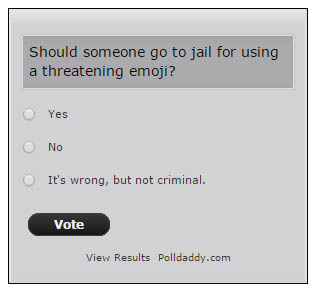
Can the use of emojis create a bigger issue? Emojis consist of more than just multiple forms of faces. Others include weapons, people, vehicles and much more. Some emojis can be considered criminally threatening leading authoritative figures to intervene.
“The case is one of a growing number where authorities contend the cartoonish symbols have been used to stalk, harass, threaten or defame people. And that has left the police and courts wrestling with how to treat a newly popular idiom many still dimly grasp,” said Jouvenal. “A grand jury in New York City recently had to decide whether 👮 🔫 represented a true threat to police officers.”
The use of emojis have taken over the methods of communicating in today’s mobile society. As the meaning behind each cartoonish symbol can represent different meanings, how can certain emojis properly be determined as a threat? Are authoritative officials heading down the right or wrong path incriminating individuals for using violent emojis?

 Spartan Echo