, , ,

Indonesia pledges to curb emissions growth

STOCKHOLM (AP) — Indonesia, the world’s fourth largest country, has pledged to strengthen the protection of its forests and boost the production of renewable energy in its target for a global climate pact. In a U.N. submission Thursday, Indonesia pledged to reduce its greenhouse gas emissions by 29 percent by 2030, relative to a business-as-usual…

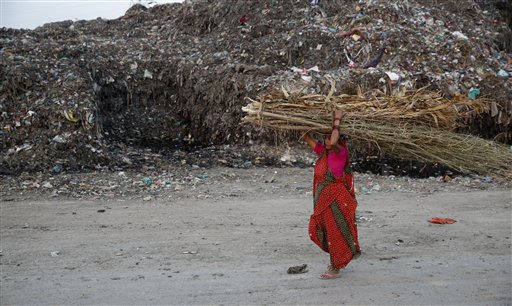
An Indian woman carries a bundle of dried branches and walks past a mound of garbage on the outskirts of Lucknow, India, Thursday, Sept. 24, 2015. India will confirm plans next week for a staggering 175 gigawatt growth in its renewable energy portfolio, Indian Environment Minister Prakash Javadekar said Thursday. India is one of the last major polluters yet to submit its plans for combating and coping with climate change to the United Nations, before the world's nations attempt to nail down a global climate pact in Paris in December. (AP Photo/Rajesh Kumar Singh)
An Indian woman carries a bundle of dried branches and walks past a mound of garbage on the outskirts of Lucknow, India, Thursday, Sept. 24, 2015. India will confirm plans next week for a staggering 175 gigawatt growth in its renewable energy portfolio, Indian Environment Minister Prakash Javadekar said Thursday. India is one of the last major polluters yet to submit its plans for combating and coping with climate change to the United Nations, before the world’s nations attempt to nail down a global climate pact in Paris in December. (AP Photo/Rajesh Kumar Singh)

STOCKHOLM (AP) — Indonesia, the world’s fourth largest country, has pledged to strengthen the protection of its forests and boost the production of renewable energy in its target for a global climate pact.

In a U.N. submission Thursday, Indonesia pledged to reduce its greenhouse gas emissions by 29 percent by 2030, relative to a business-as-usual scenario without climate action. It pledged to raise that target to 41 percent with international support, including access to finance and clean technology.

The reductions would be achieved in part through improved conservation of forests. Much of Indonesia’s emissions comes from peat and forest fires as land is cleared for farming, corporate development or oil palm plantations.

The government said Indonesia also plans to boost the share of renewable energy to at least 23 percent by 2025.