, ,

Judge to move forward with suit over NSA’s bulk collection

WASHINGTON (AP) — A federal judge says he plans to push ahead with a challenge to the National Security Agency’s bulk collection of telephone data on hundreds of millions of Americans, even as the program is set to expire at the end of November. U.S. District Court Judge Richard Leon said Wednesday he has no…

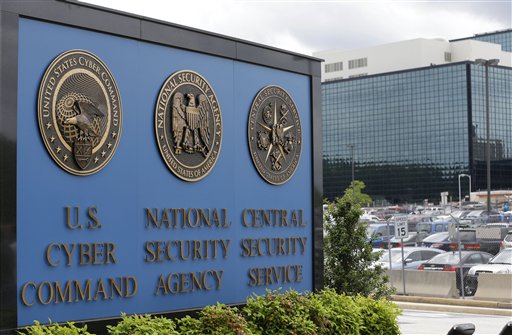
FILE - In his June 6, 2013 file photo, the National Security Agency (NSA) campus in Fort Meade, Md. A federal appeals court on Friday ruled in favor of the Obama administration in a dispute over the National Security Agency's bulk collection of telephone data on hundreds of millions of Americans. The U.S. Court of Appeals for the District of Columbia Circuit reversed a lower court ruling that said the program likely violates the Constitution's ban on unreasonable searches.  (AP Photo/Patrick Semansky, File)
FILE – In his June 6, 2013 file photo, the National Security Agency (NSA) campus in Fort Meade, Md. A federal appeals court on Friday ruled in favor of the Obama administration in a dispute over the National Security Agency’s bulk collection of telephone data on hundreds of millions of Americans. The U.S. Court of Appeals for the District of Columbia Circuit reversed a lower court ruling that said the program likely violates the Constitution’s ban on unreasonable searches. (AP Photo/Patrick Semansky, File)

WASHINGTON (AP) — A federal judge says he plans to push ahead with a challenge to the National Security Agency’s bulk collection of telephone data on hundreds of millions of Americans, even as the program is set to expire at the end of November.

U.S. District Court Judge Richard Leon said Wednesday he has no intention of allowing the Obama administration to use legal maneuvering to “run out the clock” on a lawsuit filed by a conservative activist challenging the USA Patriot Act. Leon ruled in 2013 that the mass collection of phone records is likely unconstitutional.

Congress approved a measure in June that phases out the Patriot Act and replaces it with one in which phone companies retain the records and allow the government to search them with a warrant.


Copyright 2015 The Associated Press. All rights reserved. This material may not be published, broadcast, rewritten or redistributed.